The Truth is Local
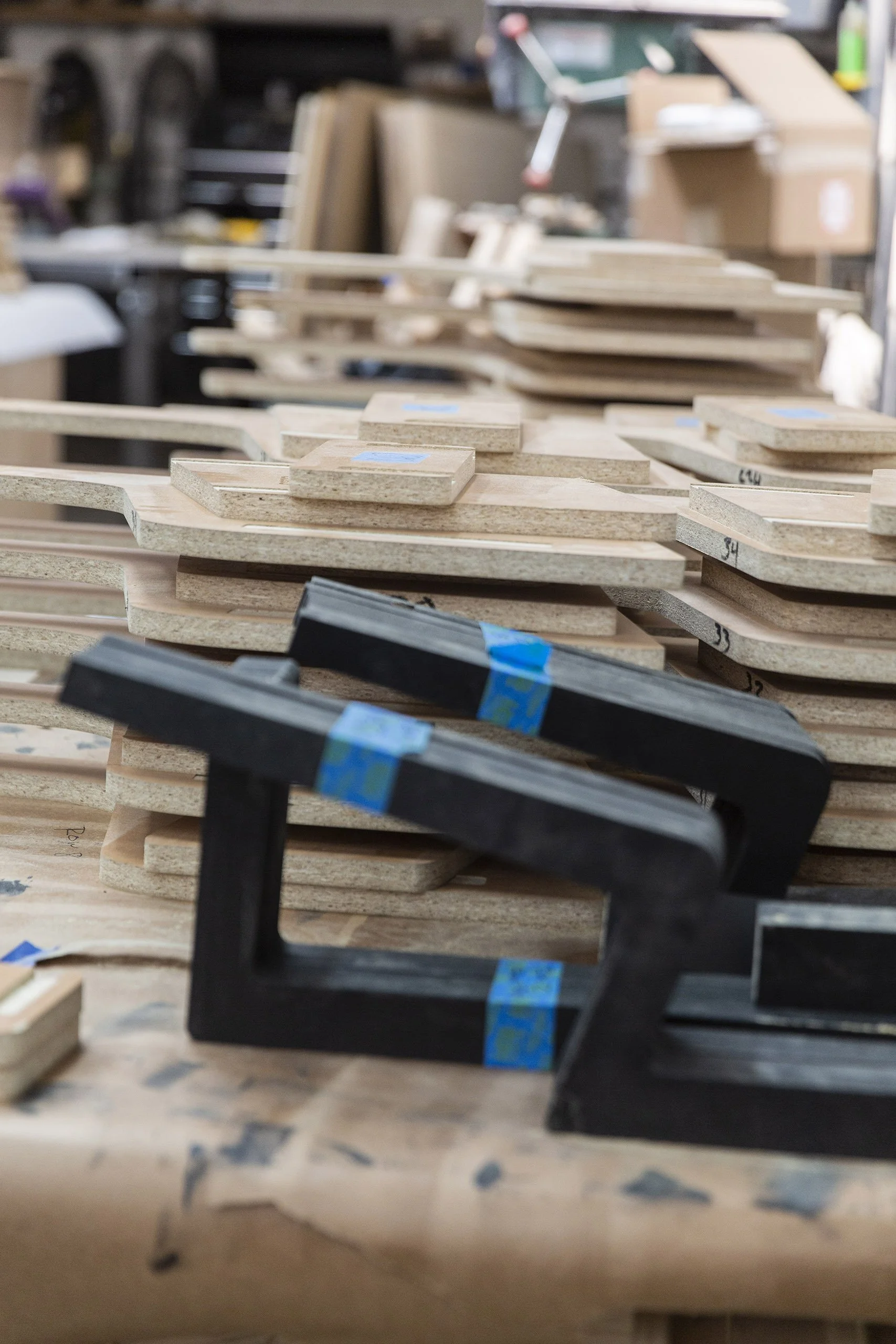
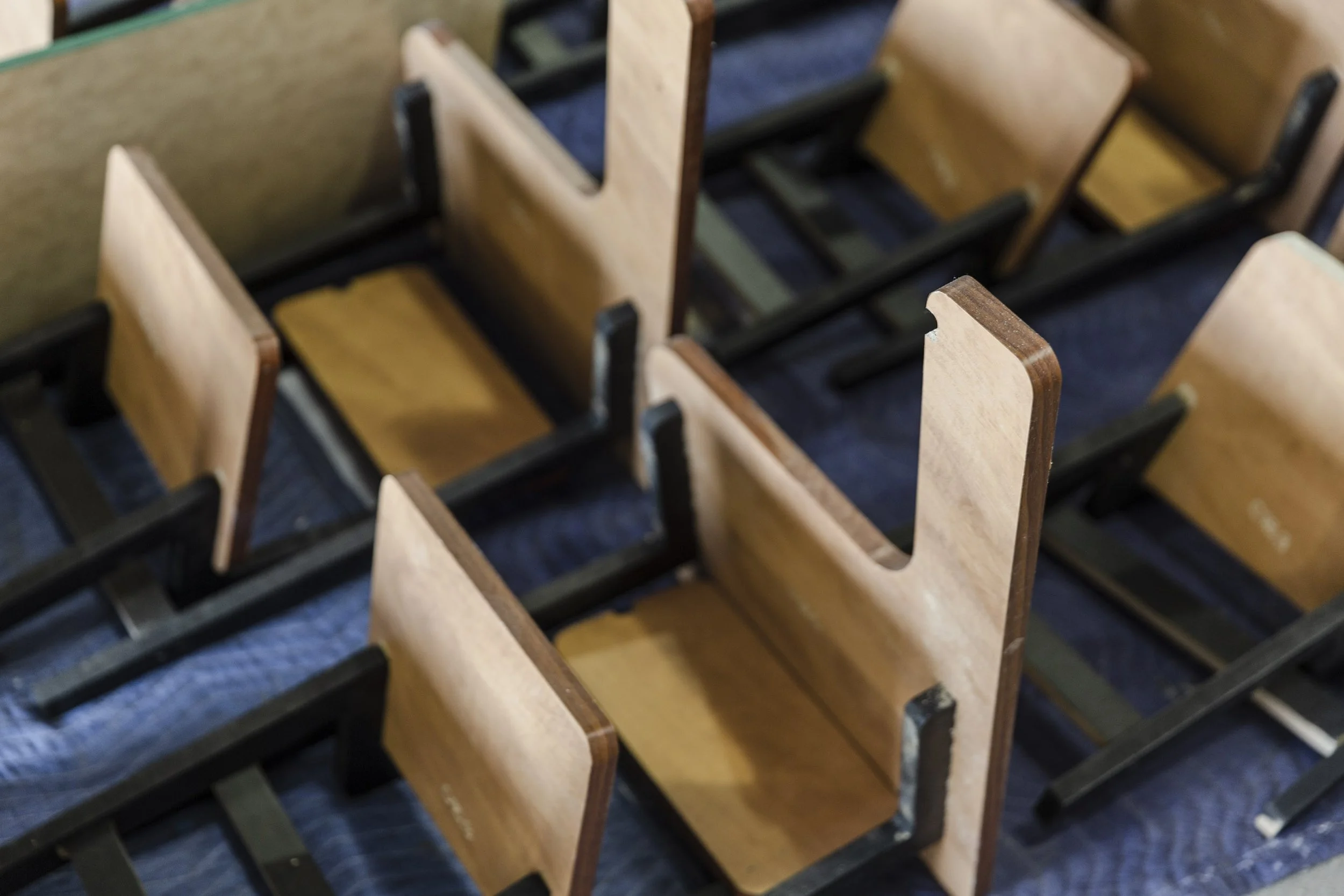
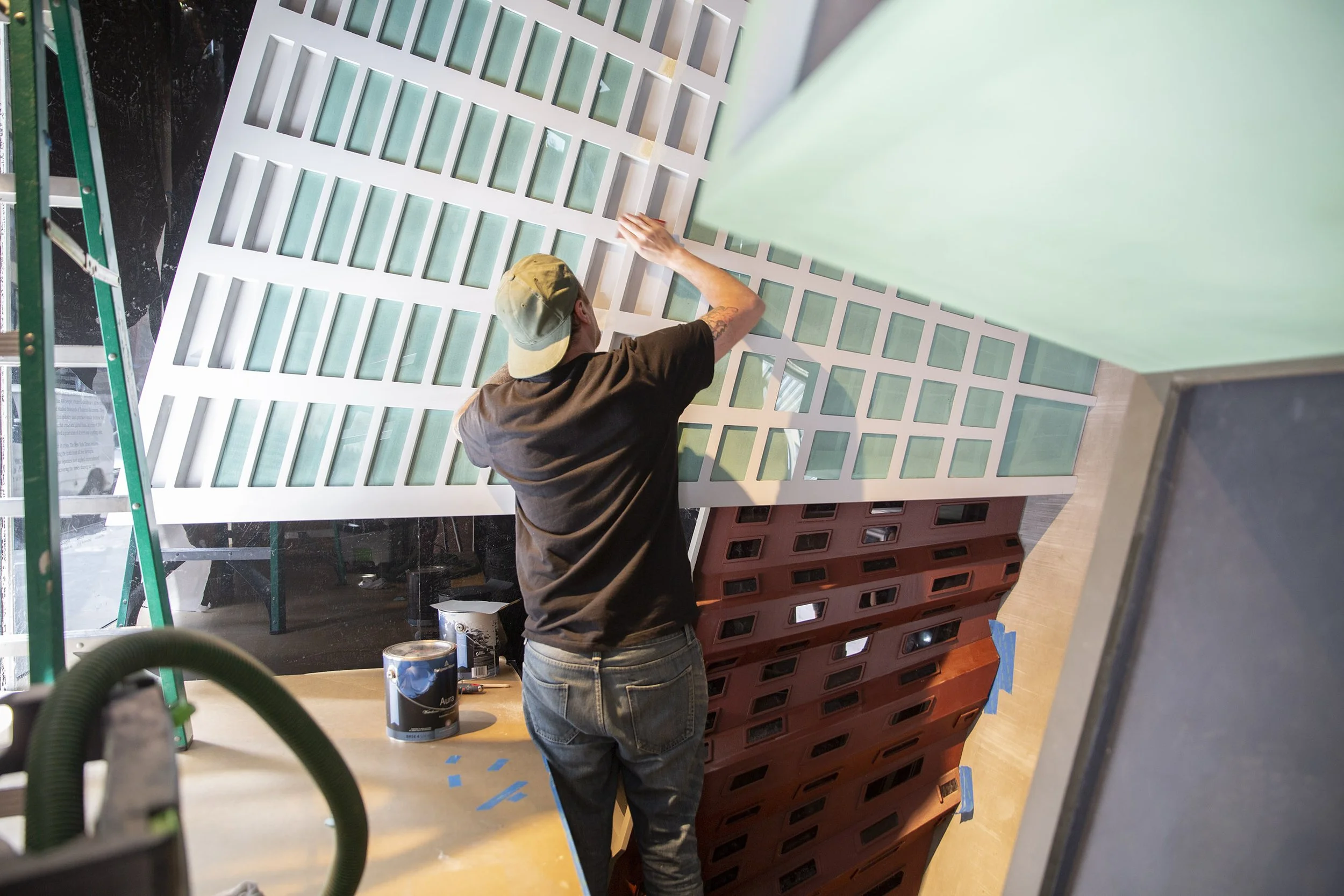
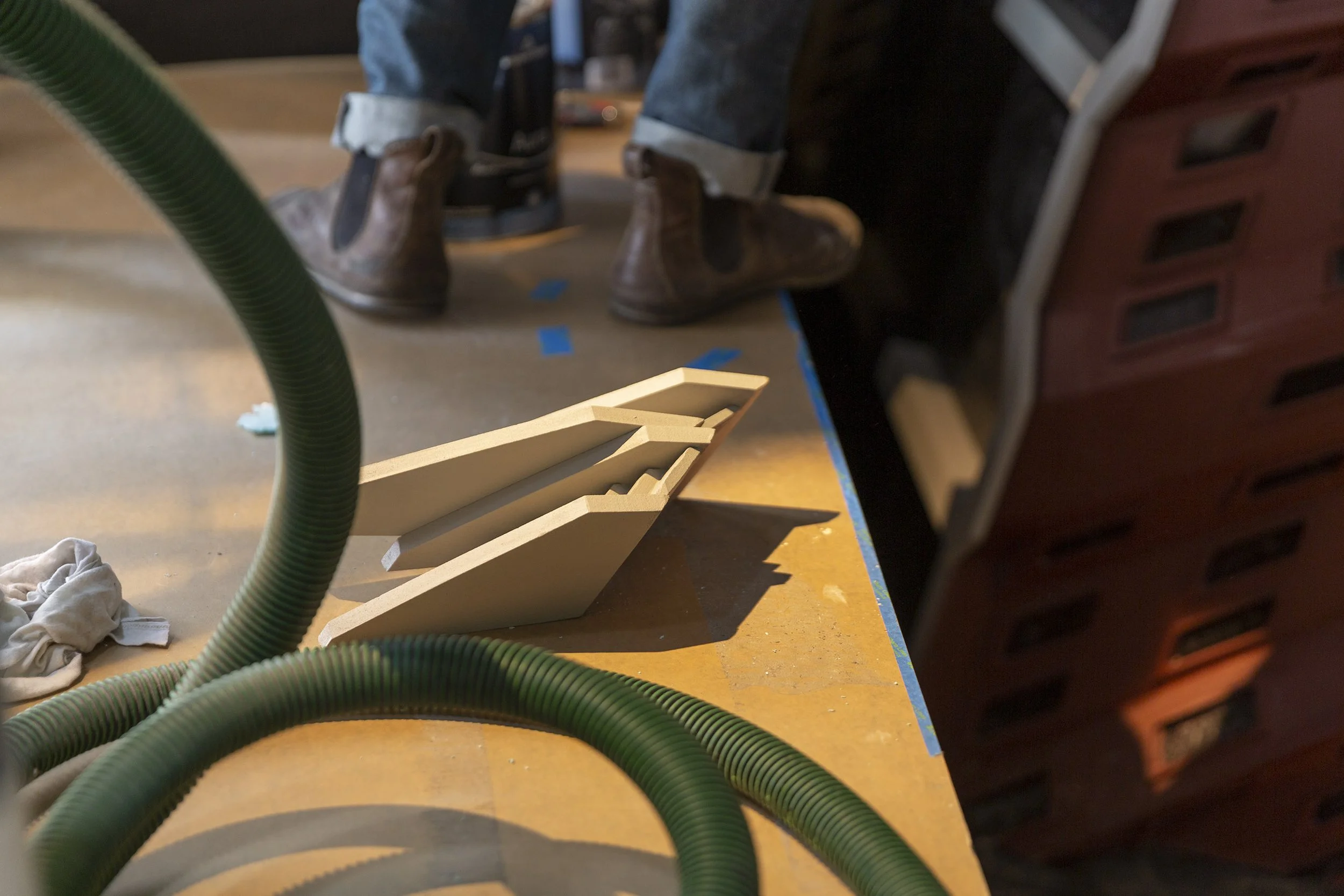
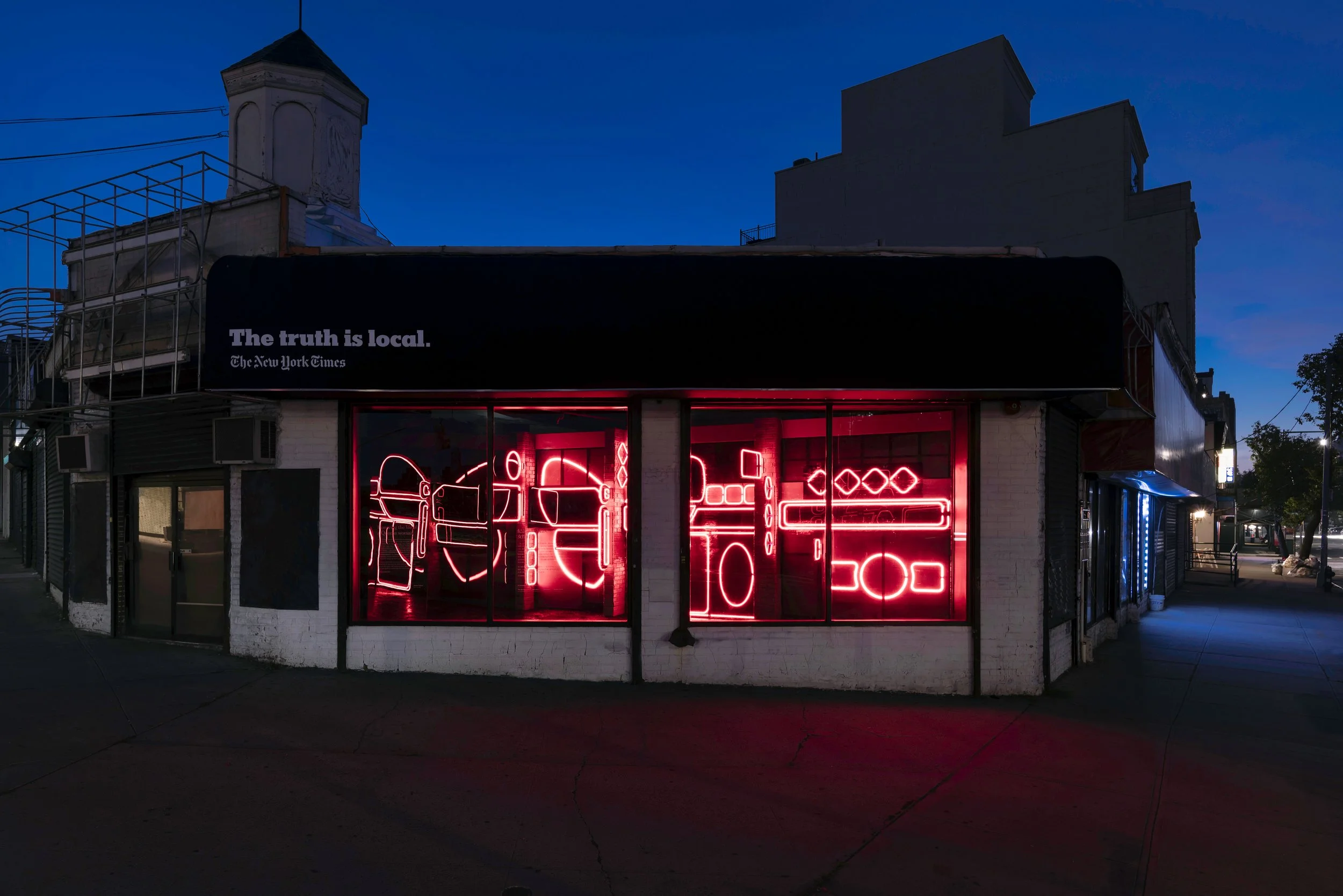
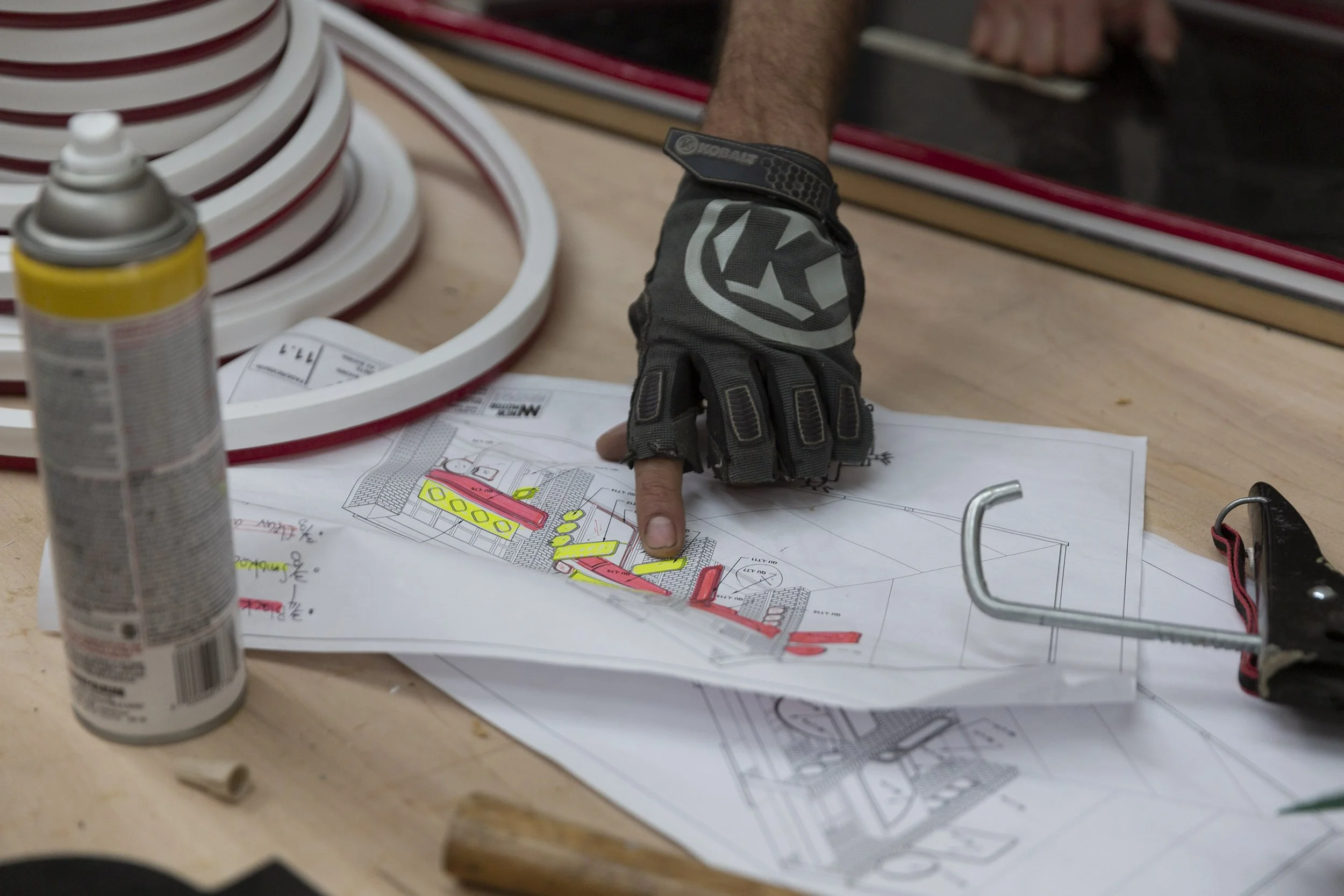
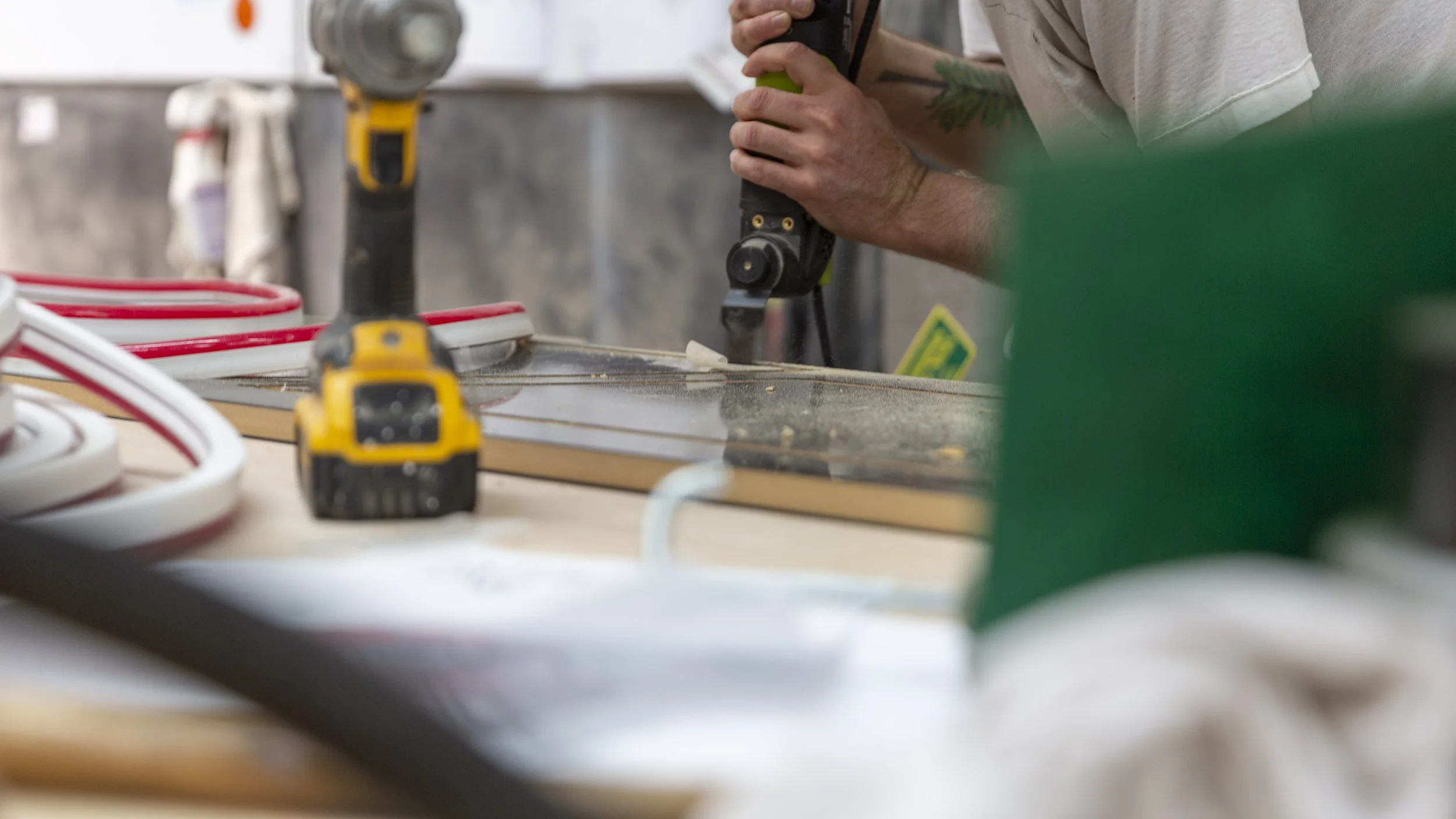
We collaborated with the New York Times on The Truth is Local campaign to highlight their hometown reporting. Over the course of three months, along with the fabrication team at The New Motor, we designed five storefront installations that featured in-depth reporting from each New York City borough.
The Bronx
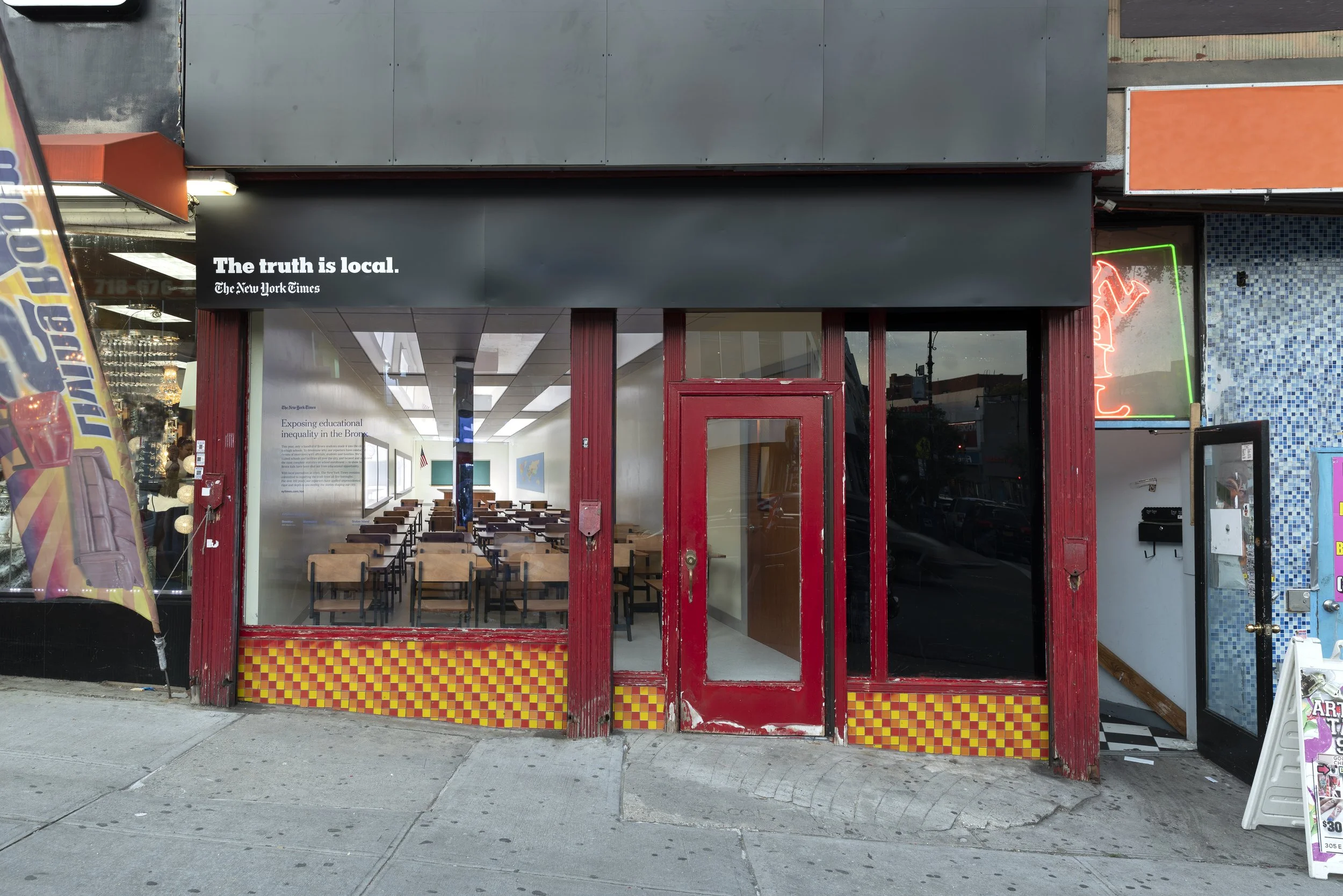
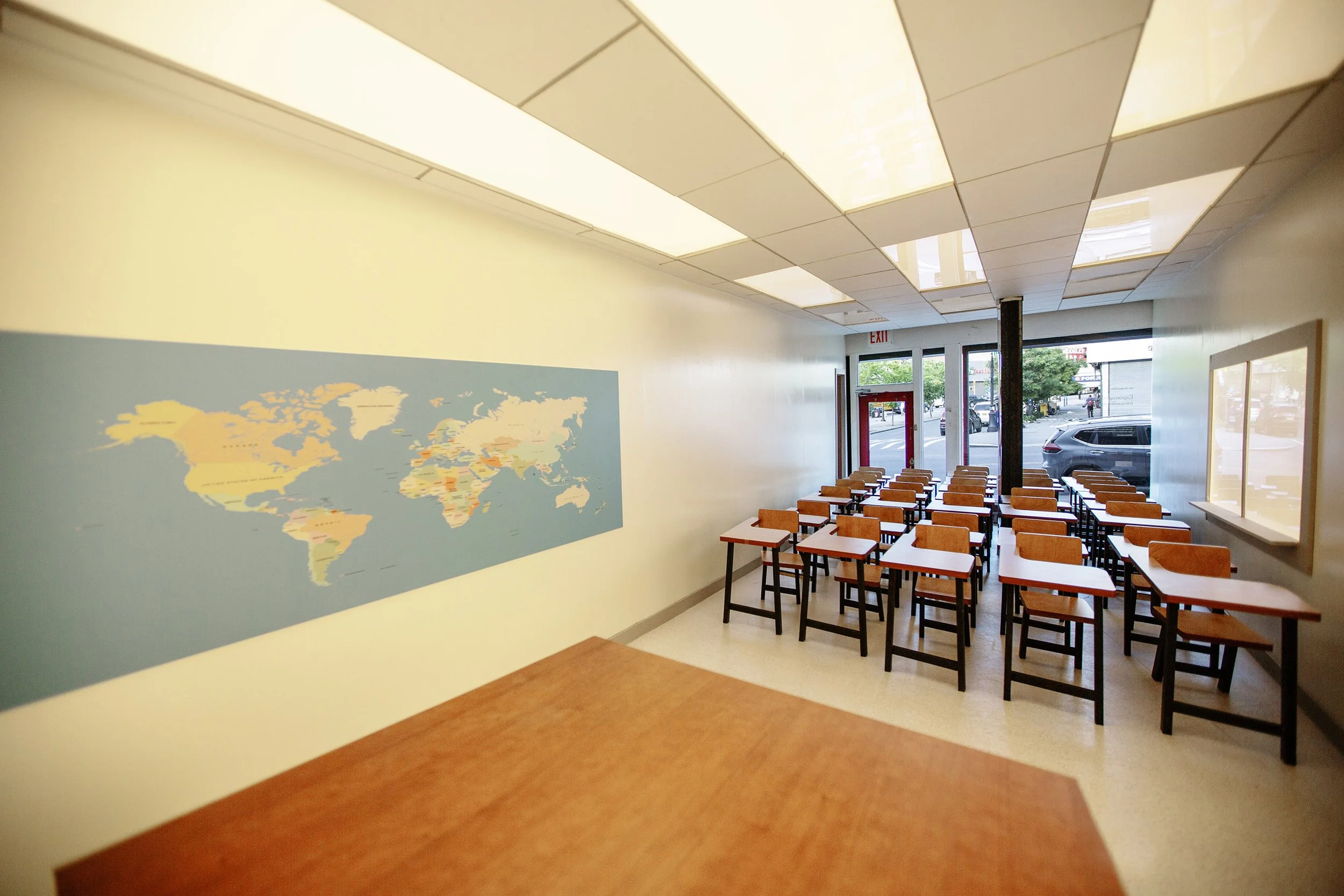
This storefront in The Bronx depicts The Times reporting on education inequality prevalent in New York City’s public school system. We created an installation that illustrates the feeling of being seated at a school desk. The classroom is built with a forced perspective to emphasize the difficulties of accessing educational opportunities for students in The Bronx.
Brooklyn
Review of 50 Brooklyn Murder Cases Ordered
By Frances Robles
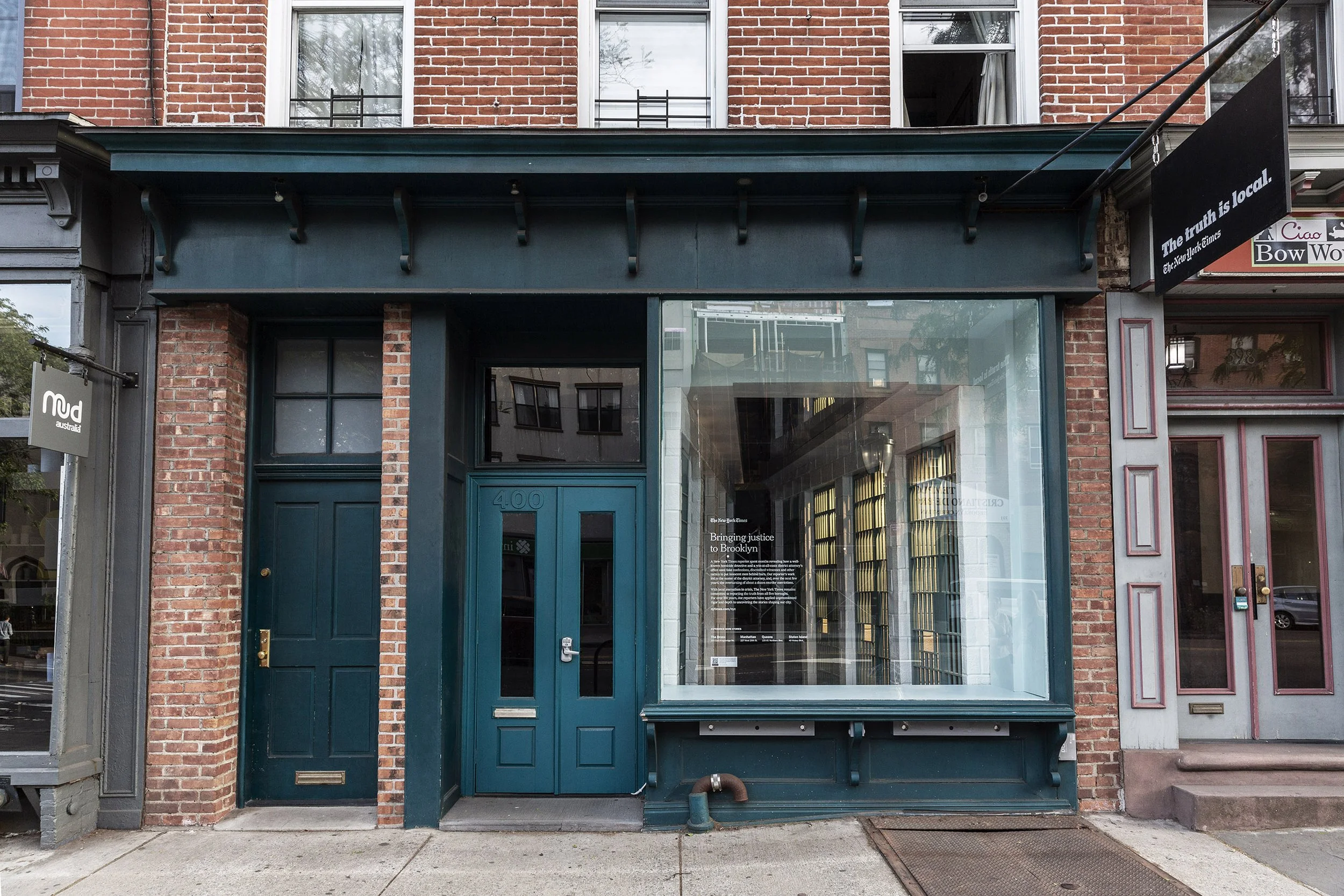
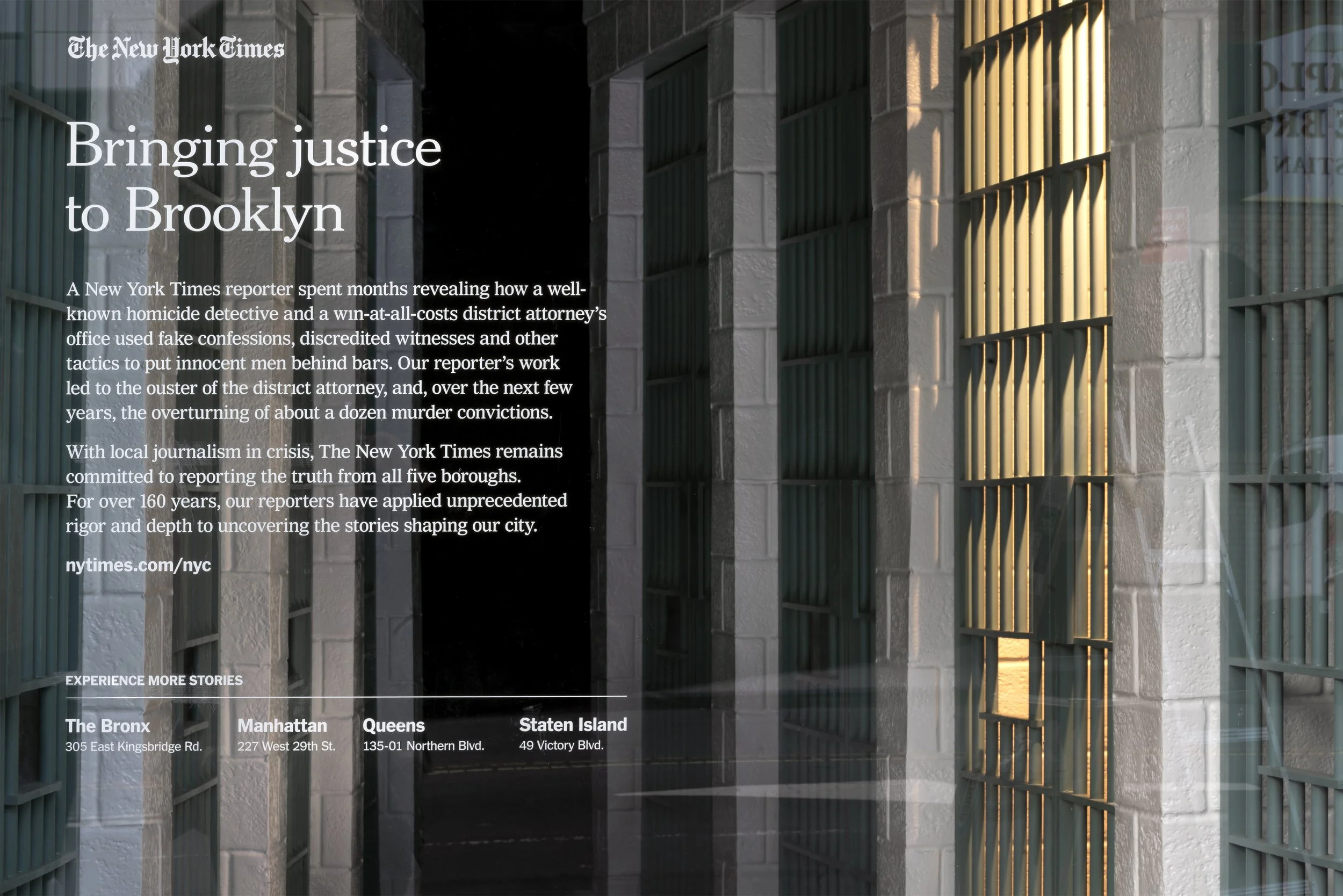
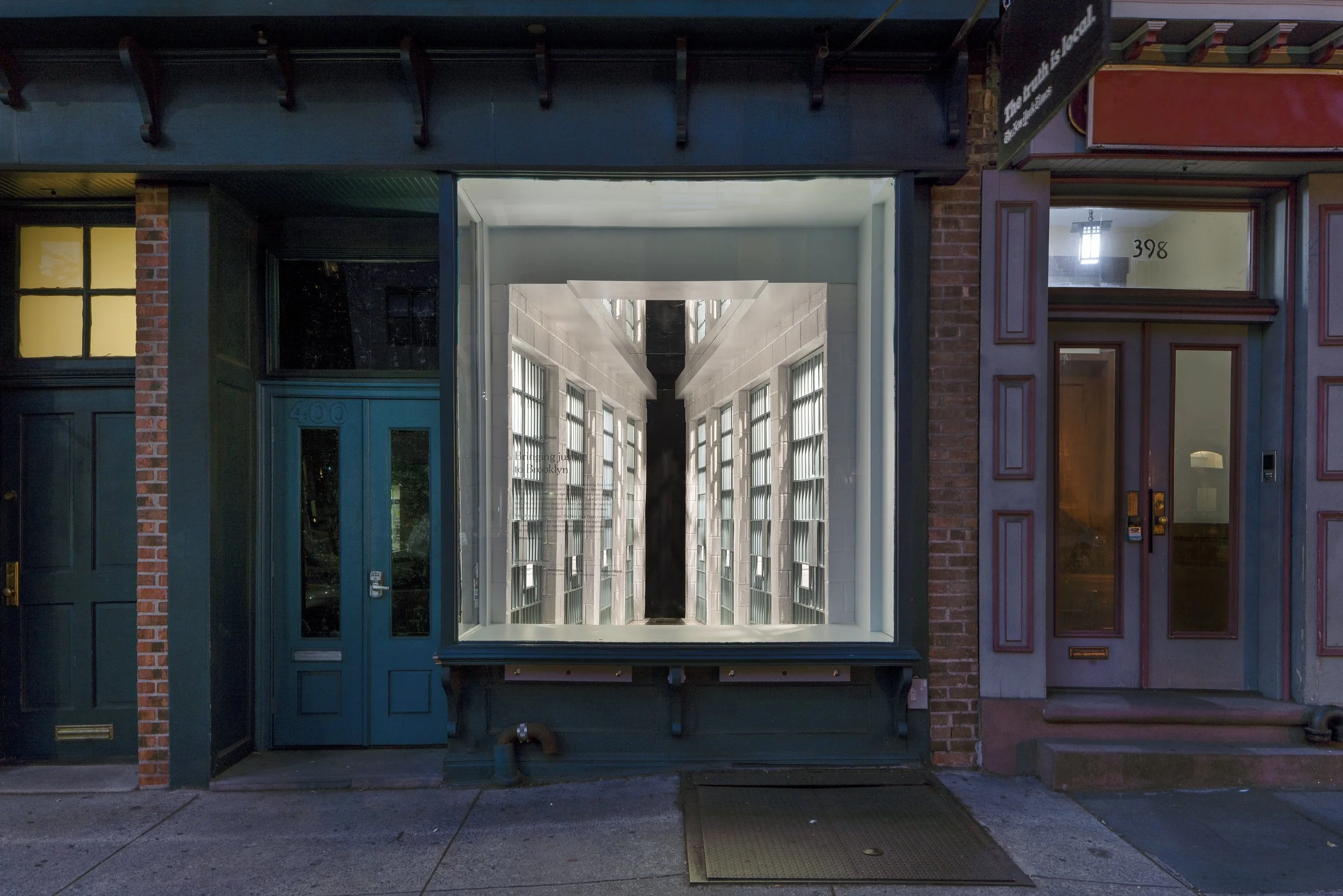
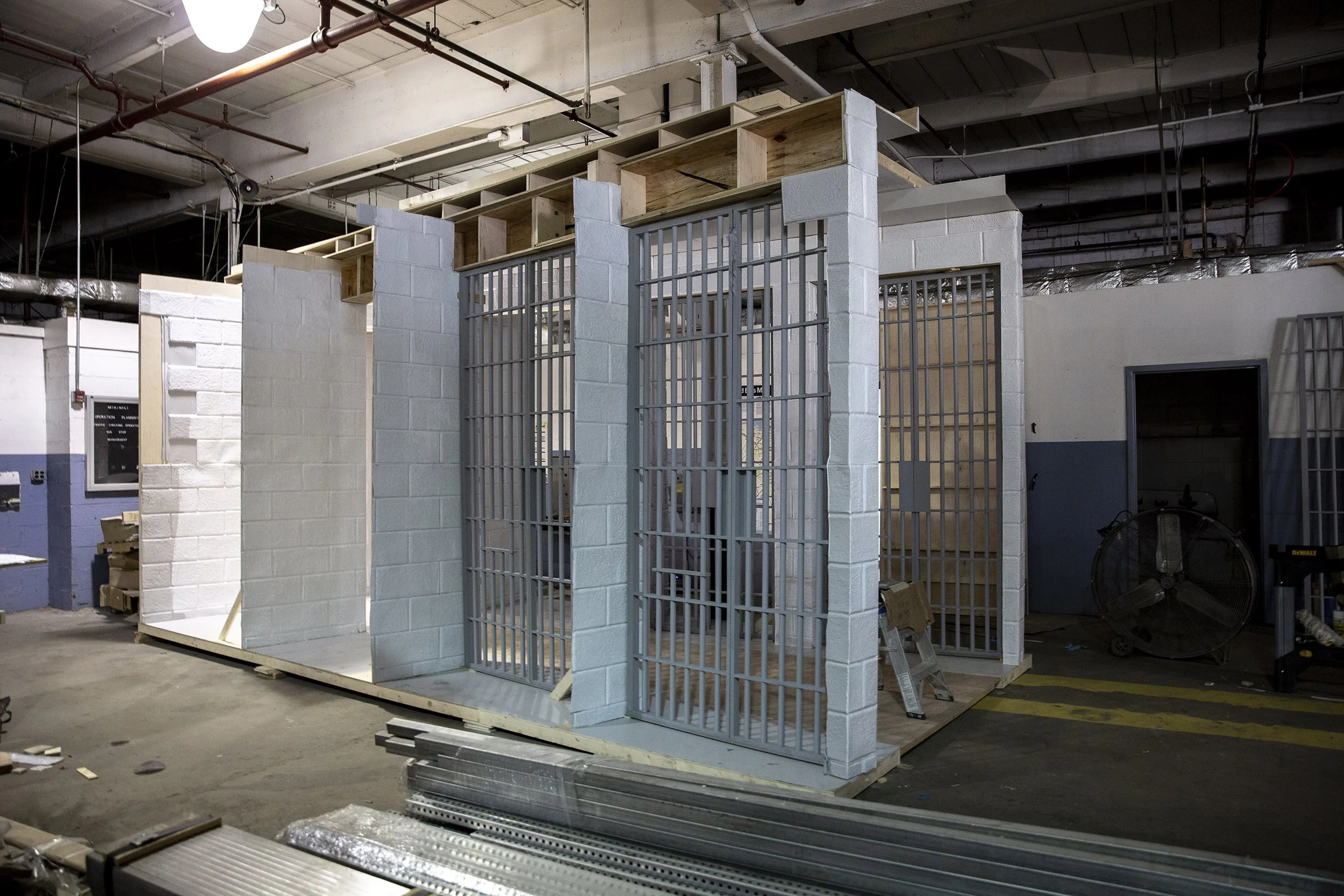
The Brooklyn location is centered around the reporting of Frances Robles, who’s investigation led to the review of over 50 murder cases based on a detective’s use of false confessions and witness testimonies. As one approaches the installation, the cells begin to illuminate through the use of presence sensors. The mirrored ground and ceiling create the illusion of infinitely stacked cells, highlighting America’s broken prison system and struggle with mass incarceration.
Manhattan
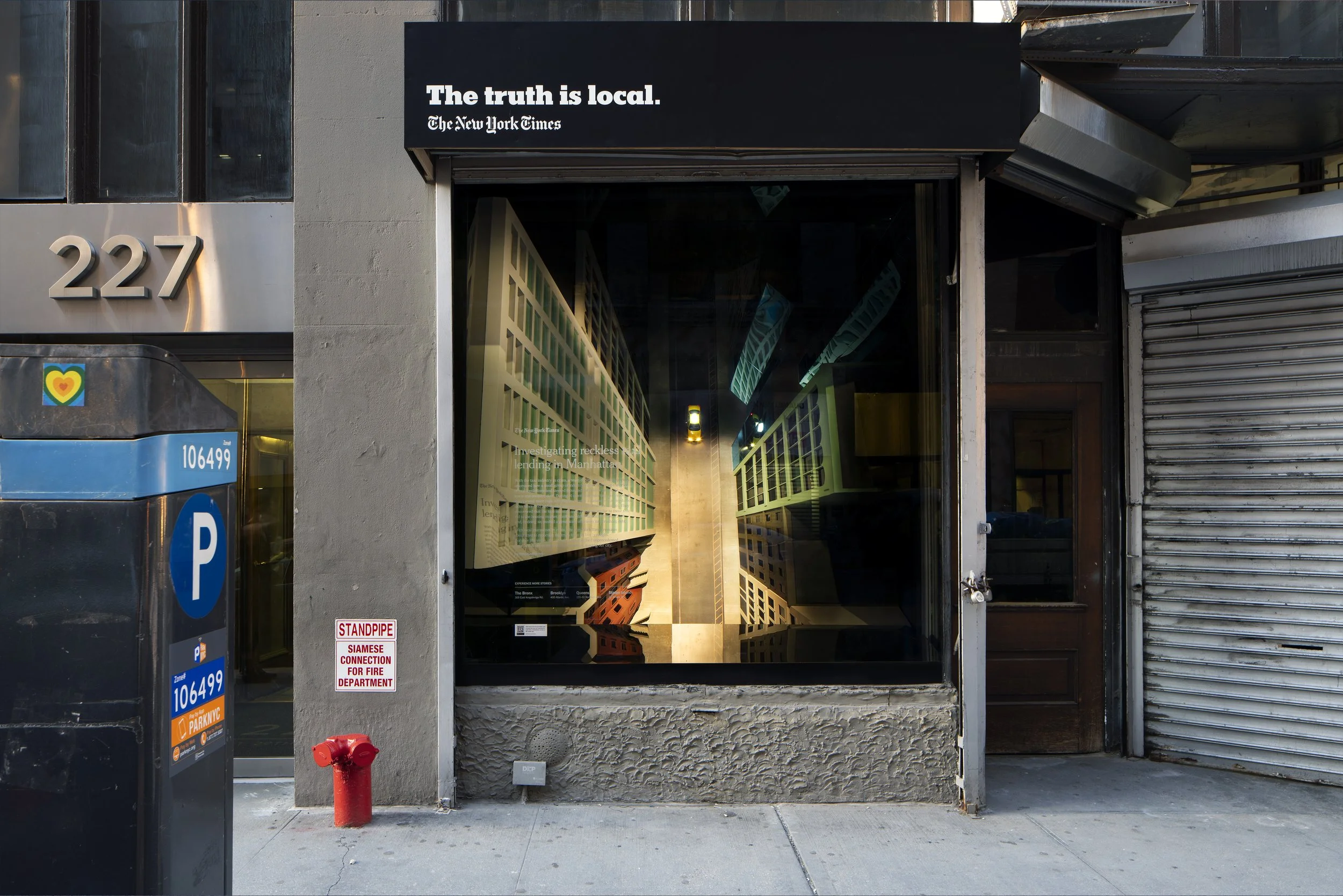
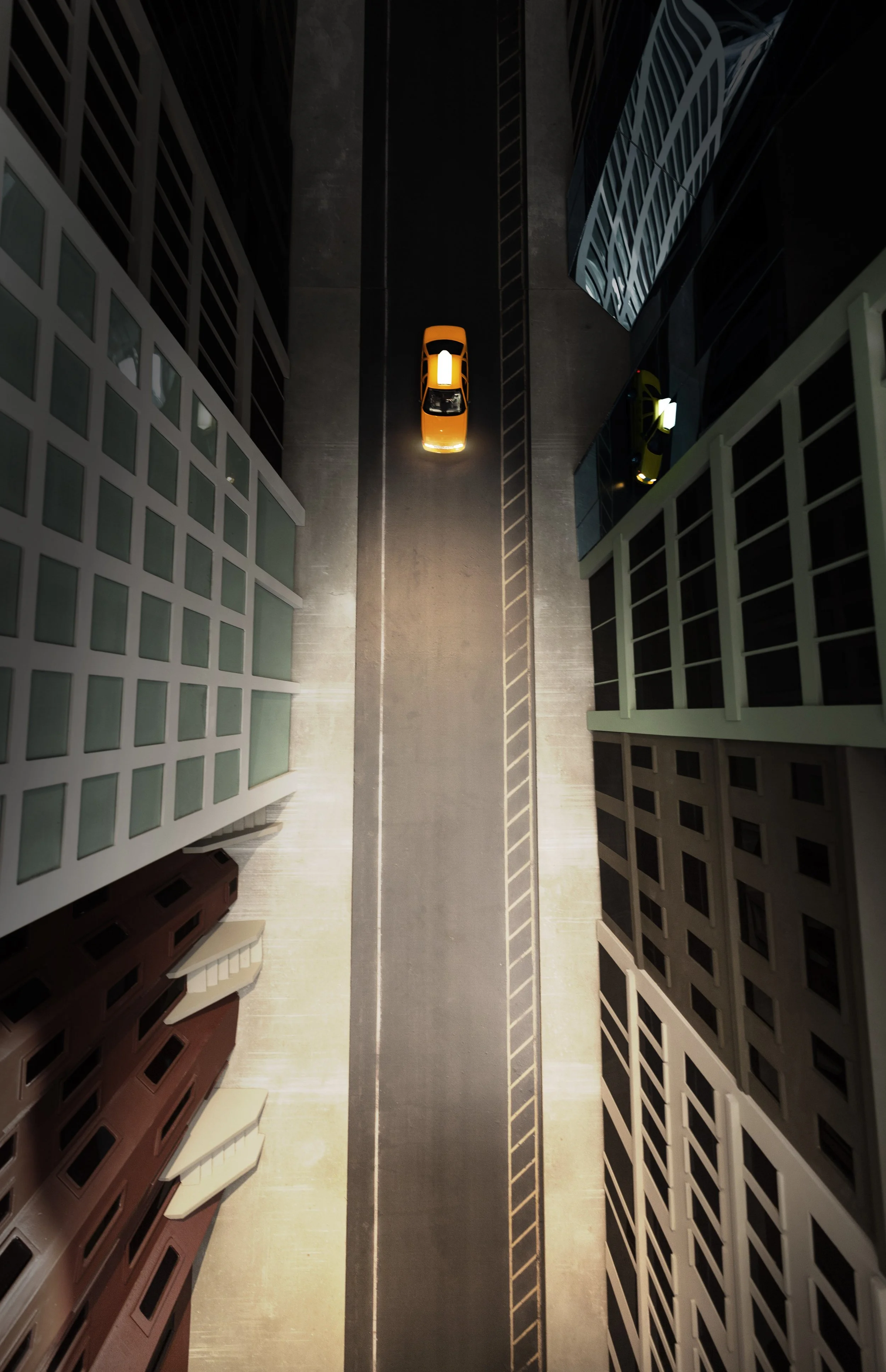
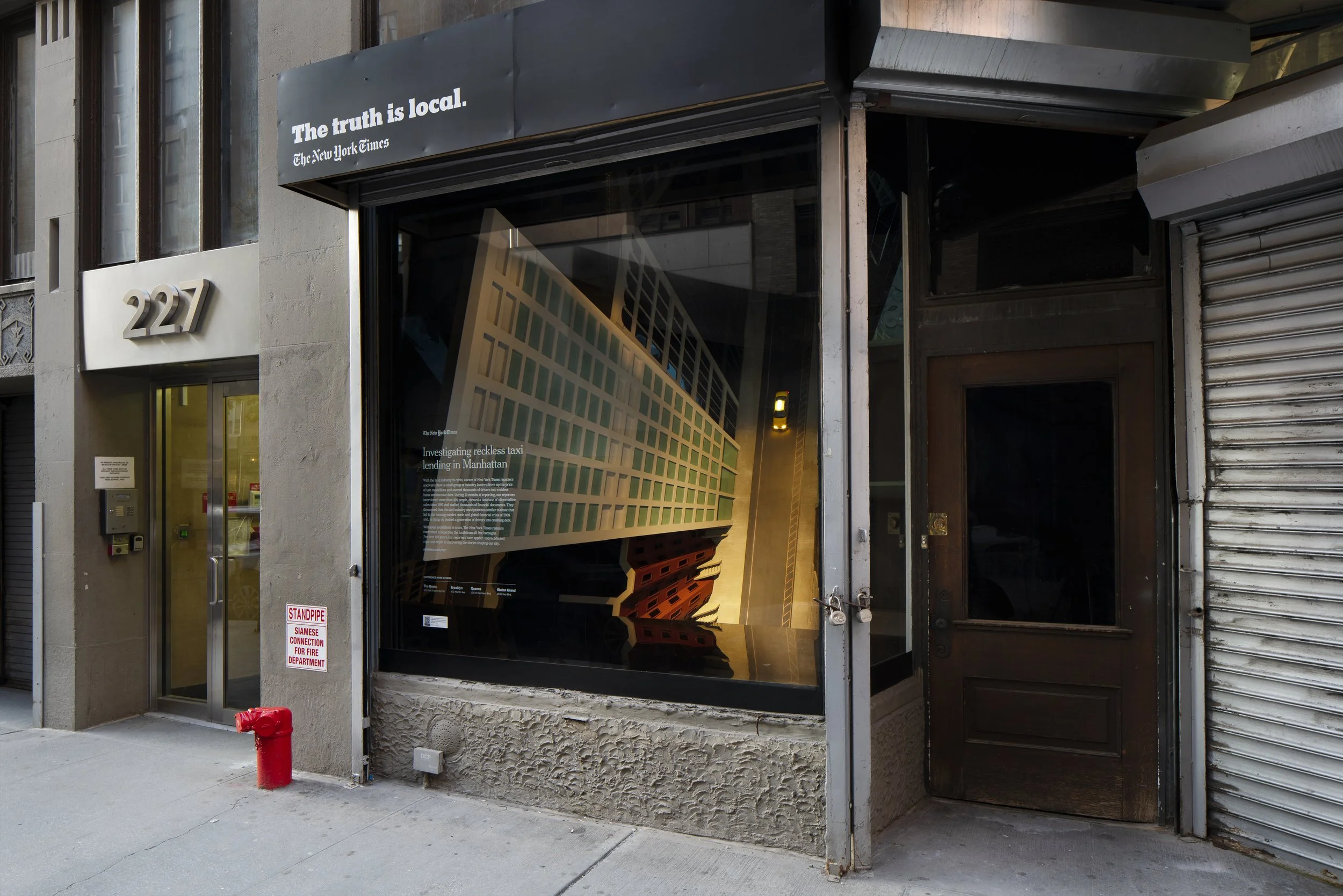
The Manhattan installation is based on the The Time’s in-depth reporting on the artificially inflated price of a taxi cab medallion, reckless lending practices, and a false sense of income security. The bird’s eye view of a dense New York city block juxtaposed with the lone presence of the iconic yellow taxi cab emphasizes the solitude many drivers endure as they navigate the complications of this industry.
Staten Island
A Subway to Staten Island? How a Transit Dream Died
By Amisha Padnani
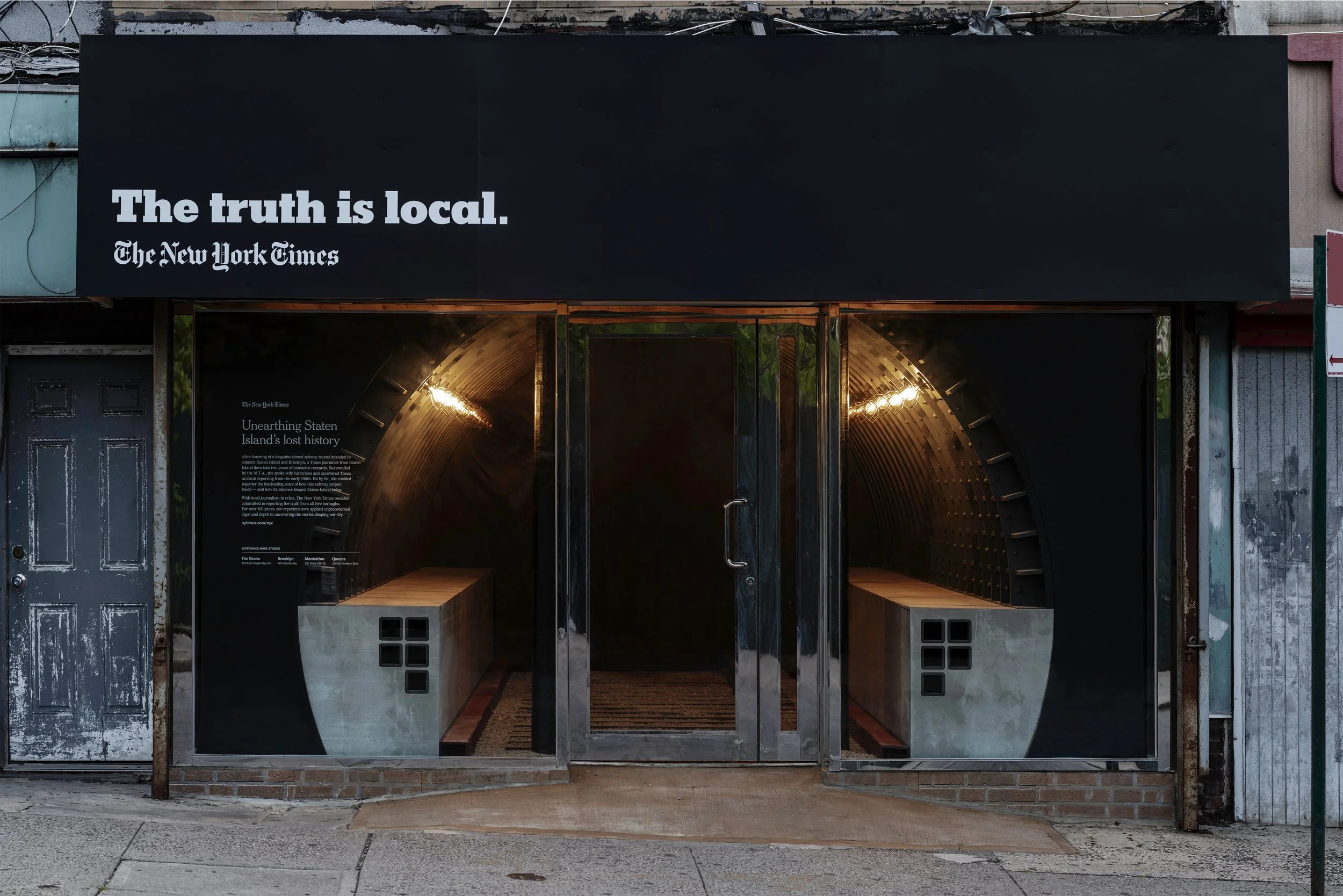
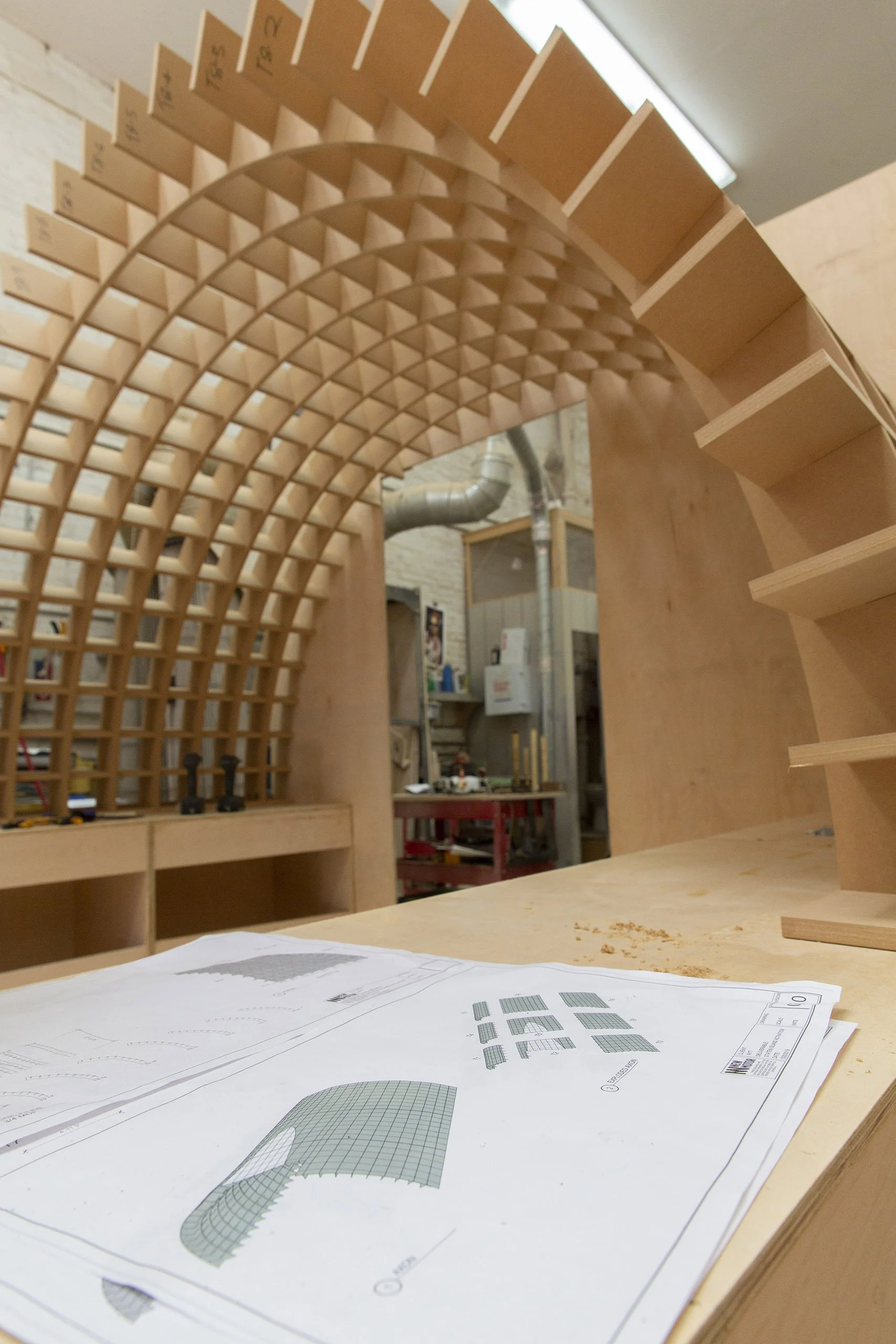
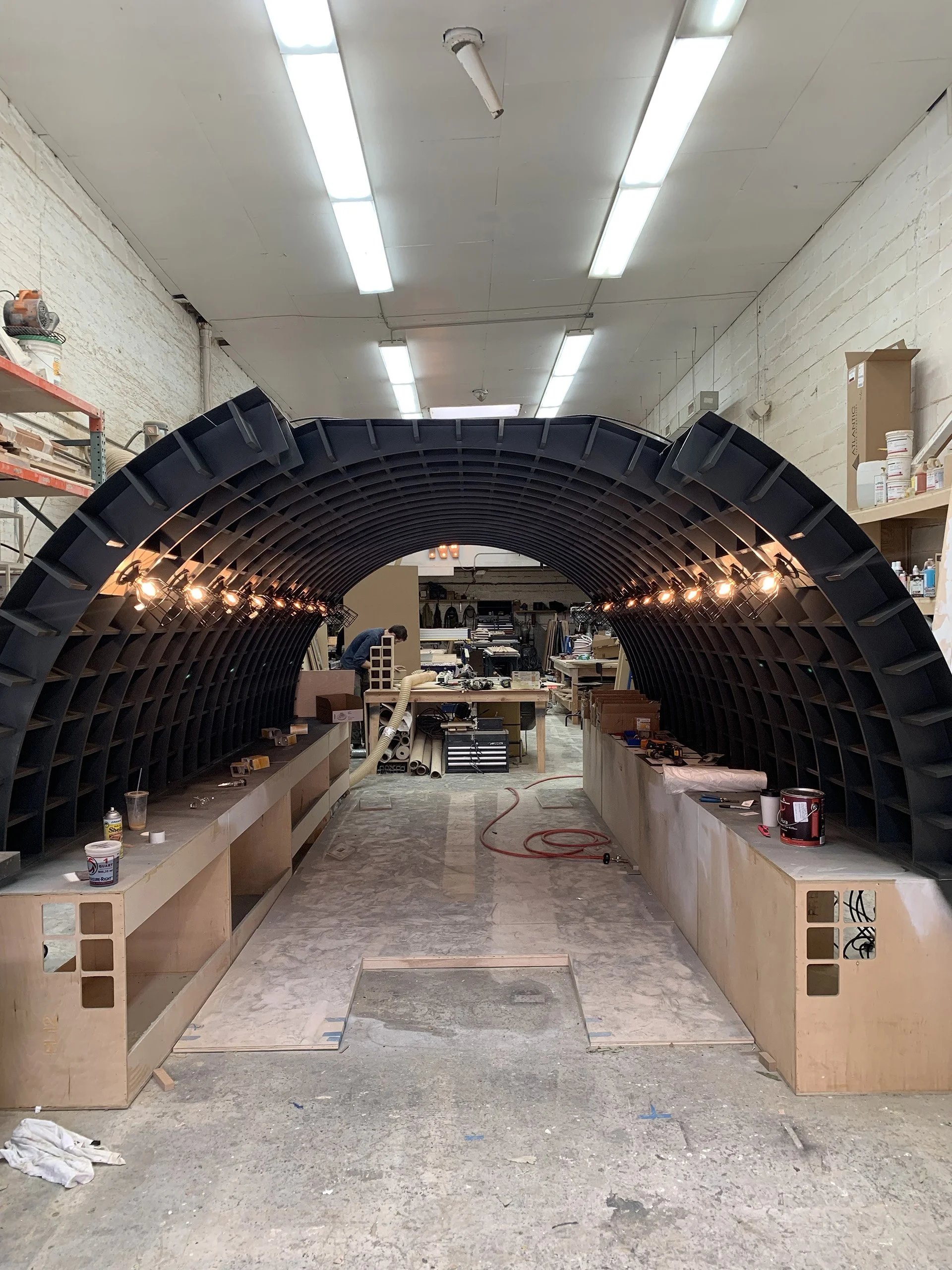
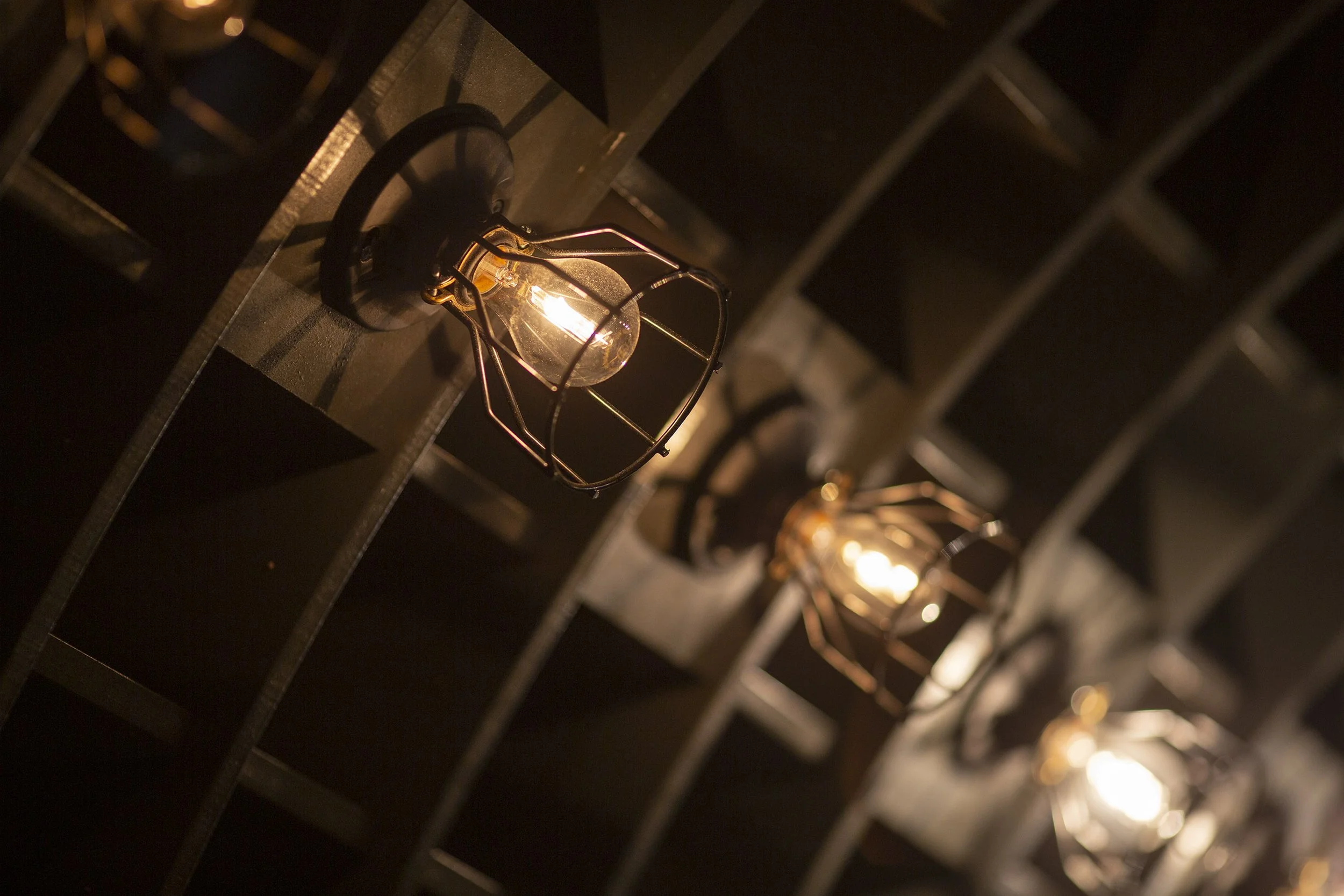
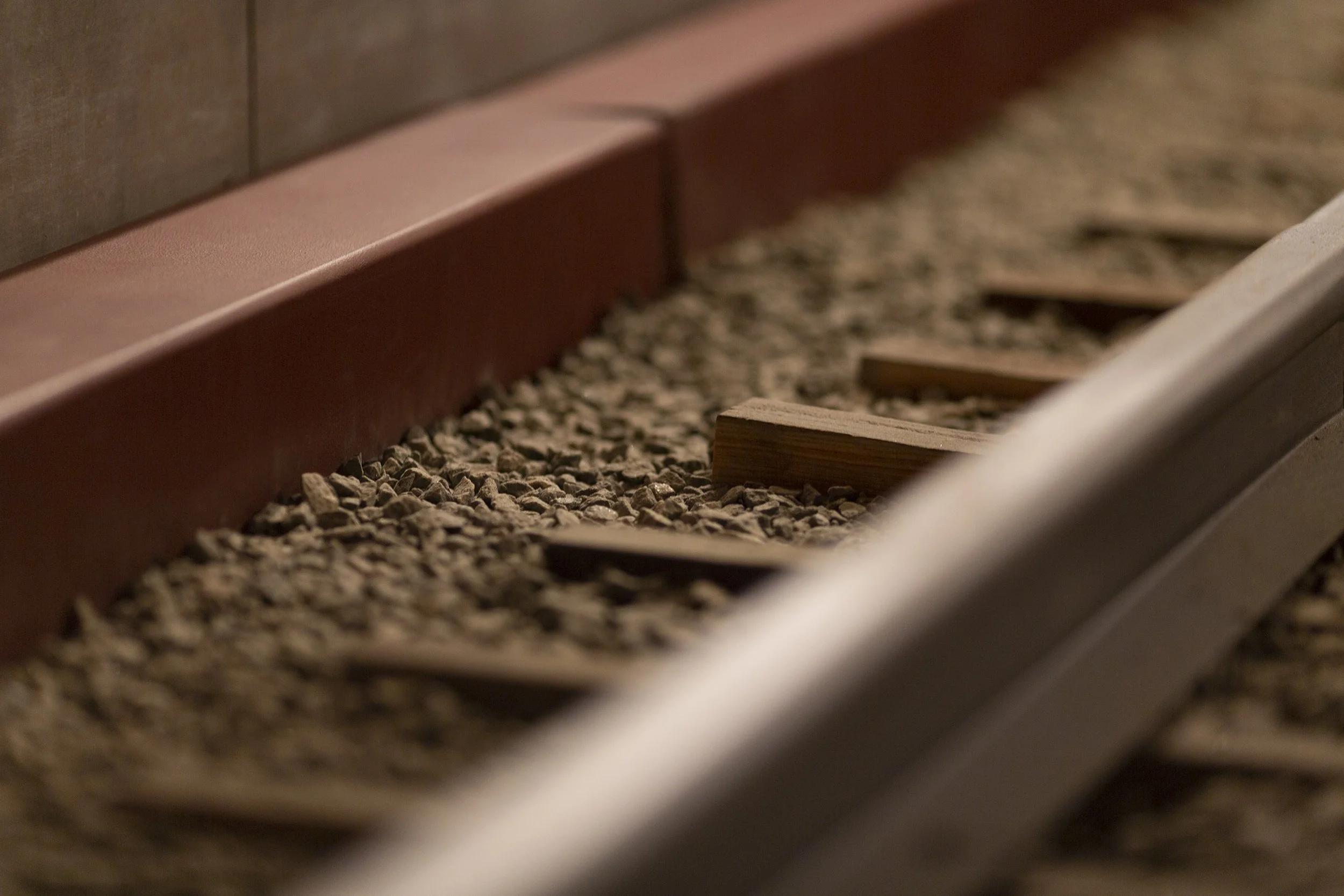
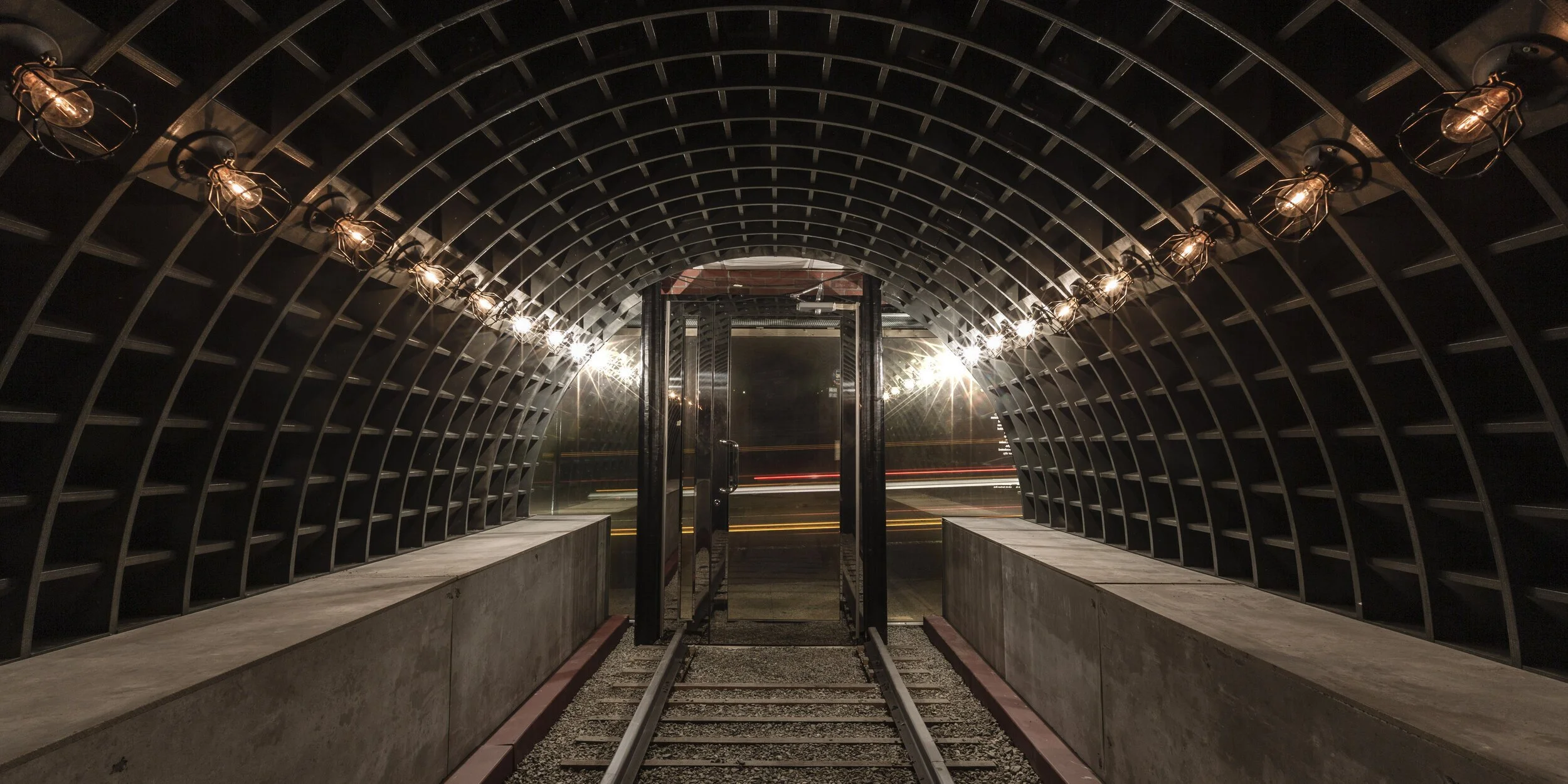
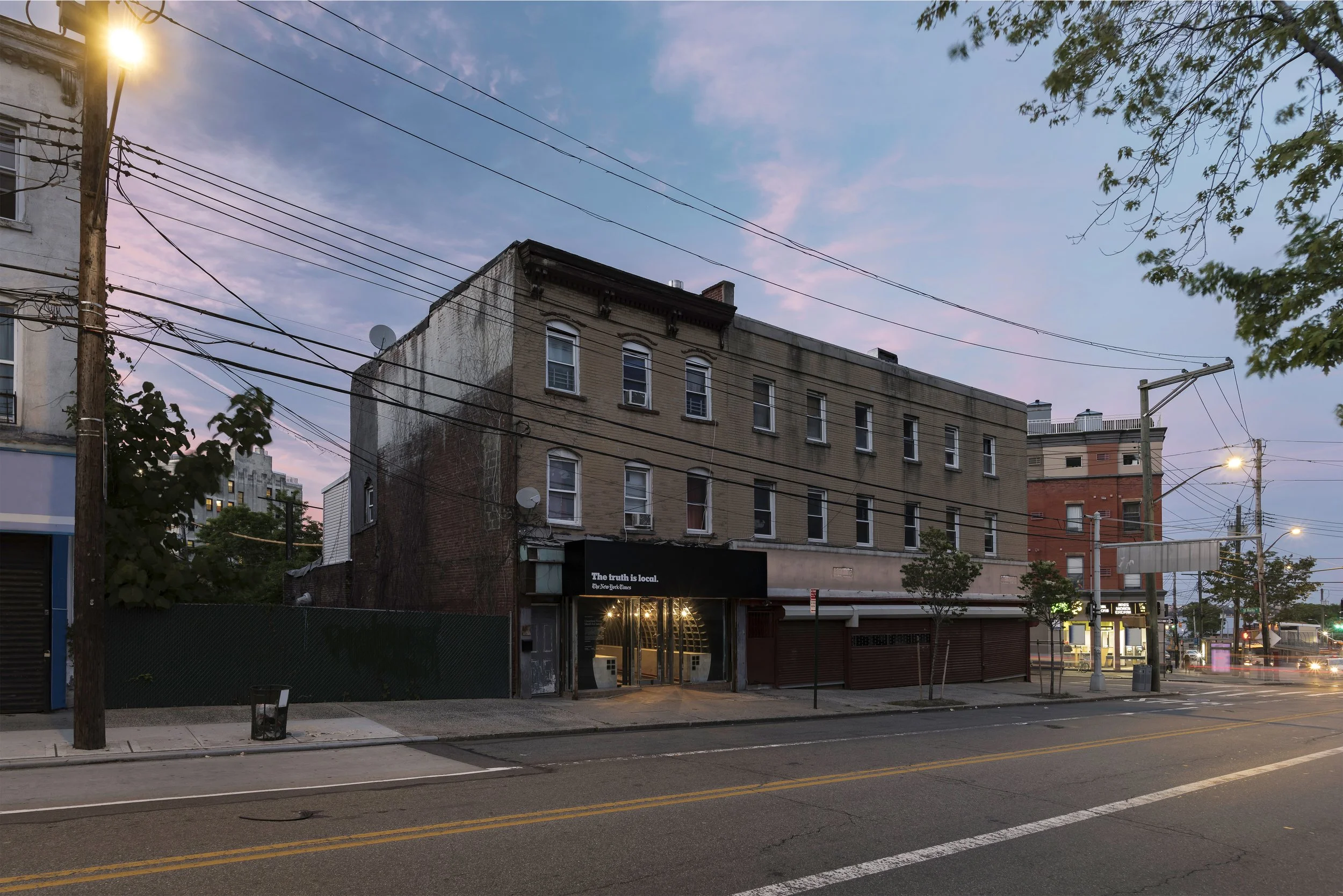
The installation in Staten Island examines the history of the abandoned efforts to extend the subway to the borough. During our research, we came upon an image of the unfinished tracks. This was the inspiration behind the storefront installation concept. We used forced perspective to create the illusion of the unfinished tunnel receding into the building to contrast the present day commute of the Staten Island Ferry.
Queens
By By Dan Barry and Jeffrey E. Singer
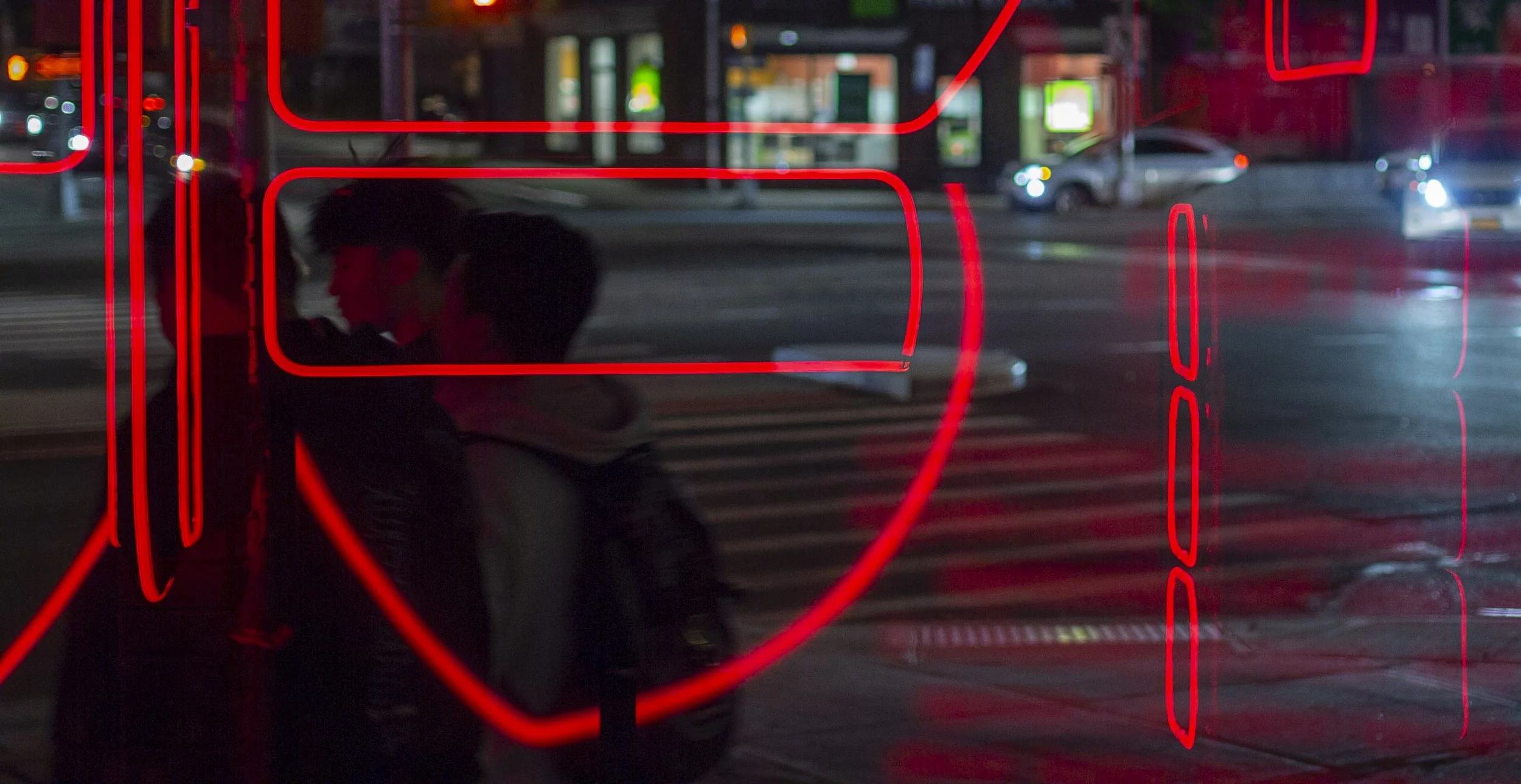
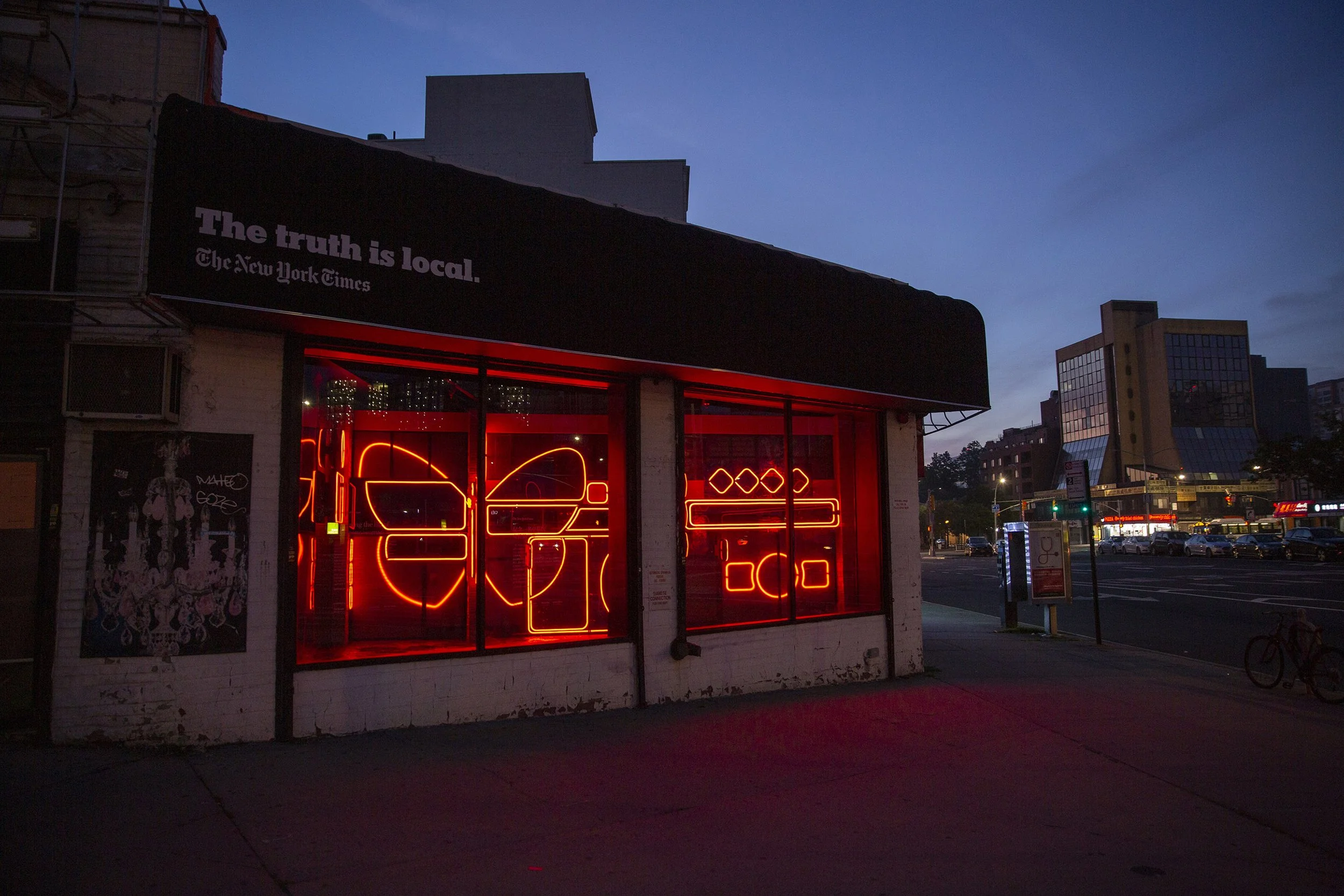
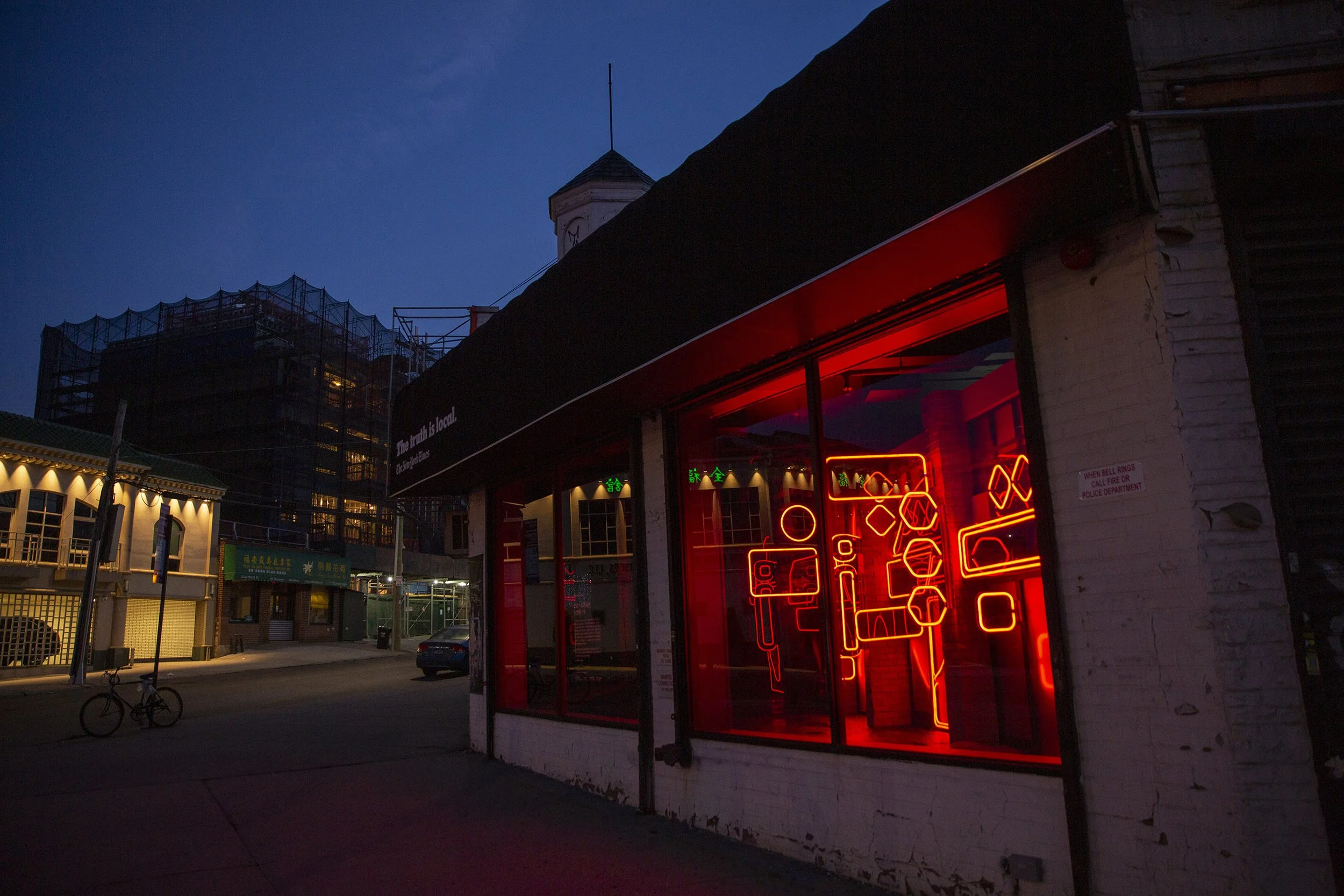
The Queens storefront was inspired by one of the most powerful pieces by The Times in 2019, The Case of Jane Doe Ponytail. It tells the story of the life and death of a woman from Queens. What otherwise would have been overlooked as a statistic, Dan Barry sought to tell the whole story of her life. The installation depicts a subtle anamorphic illusion representative of the shapes and lights of 40th Road, where she worked. Taking advantage of the corner storefront, we designed the installation to appear differently depending on the direction it is approached from. From one perspective, the details of the street’s signage are in focus, and from another, the neon lights form a butterfly, a symbol she loved.
Credits
My role: Concept Design, Physical Design, Fabrication Oversight
Created at Local Projects
Creative Direction: Christopher Fung
Design Direction: Anthony Dong
Project Management: Charlotte Harris
Physical Design: Nima Vakili
Art Direction: Duy Pham, Anthony Roy
Content Development: Andrea Worby
Fabrication: The New Motor
Photo Documentation: Karsten Moran, Juliana Sohn